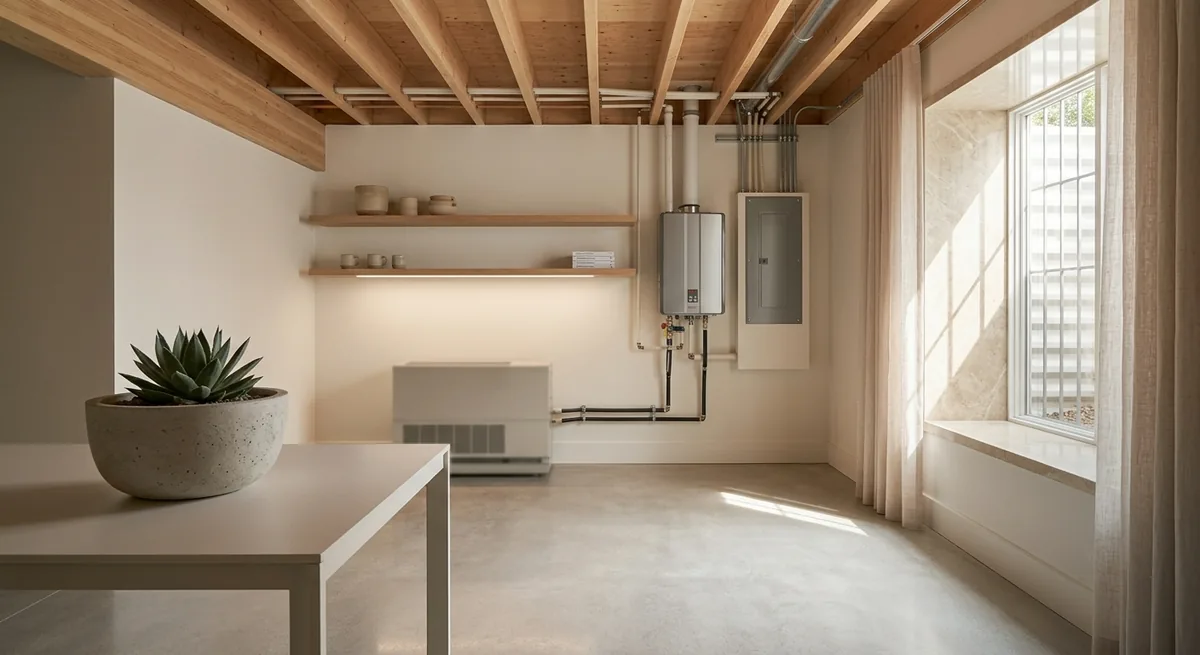
Electrical, a panel you never think about
It usually starts with a breaker you have started to expect to trip. The hard part is not the work - it is that every electrical company sounds equally sure of itself, and you get one guess. We check licence and insurance before we introduce anyone, and we record the date we checked.
See who is actually qualified near you
- 23Sections published
- 1,292Pages planned
- FreeCost to homeowners
- $0Cost to homeowners
Electrical in short
Residential electricians handle four kinds of work: service and panel work (the meter, main breaker and breaker box), branch-circuit work (outlets, switches, lights and dedicated appliance circuits), diagnostics and repair (tripping breakers, dead circuits, burning smells), and new load installs (EV chargers, heat pumps, hot tubs, generators). Panel, service-entrance and new-circuit work is permitted, inspected work in most jurisdictions and is not a DIY job.
Most residential electrical work is priced either hourly plus materials or as a flat rate per job. In 2026, a 200-amp panel upgrade typically runs about $1,300-$3,000 installed, with a national average near $2,150, per This Old House; a whole-house rewire is far larger, commonly $12,000-$36,600. Electrical permits are usually $50-$350, depending on the locality.
Explore Electrical
Everything we publish on electrical, grouped the way homeowners actually search - not the way a company would organise it.
- Services 21 services - replacement, repair, and specialty work 21 pages
- Cost What electrical actually costs in 2026, by type and by city 202 pages
- Problems Something wrong? Start here 14 pages
- Comparisons Option A vs. B, compared honestly 8 pages
- Guides In-depth guides on electrical, written and reviewed by pros 13 pages
- Tools Estimate your project cost in under a minute 10 pages planned
- Materials 6 materials - cost, lifespan and where each one fits 6 pages
- Brands 9 electrical brands, compared on price and warranty 9 pages planned
- Decision Guides Which option is actually right for your home 2 pages
- Checklists Step-by-step checklists before you hire 4 pages
- Maintenance Keep it working - schedules and upkeep 1 page
- Components Every component, explained 15 pages
- Financing Ways to pay over time, and what they really cost 1 page
- Permits Permit rules and what they cost 1 page
- Codes Codes and permits that apply to this work 8 pages
- Insurance What insurance covers, and what it does not 1 page
- Warranties What the warranty actually covers 1 page
- Research The data behind our recommendations 8 pages
- FAQ Answers to the most common electrical questions 1 page
- Glossary Electrical terms explained in plain English 17 pages
- AI Tools Describe the problem, get a plain-English answer 2 pages planned
How a pro gets in front of you
Most sites sell your number to whoever pays the most for it. We do not - your details reach only the electrical companies matched to your job. We are building licence and insurance checks on top of that, and we will publish each one with the date it was performed rather than claim it in advance.
A few pros, never a list
Your details go to the small number of local companies matched to your job, and to nobody else. They are not sold on.
No paid placement
A company cannot buy a better position in a match or in our rankings. Where we rank, the method is published so you can re-score it yourself.
Check the licence yourself
Ask for the number and look it up on your state board’s public register. We are building this into the match; it is not running yet.
Ask the insurer, not the contractor
Get liability and workers’ compensation certificates sent to you by the insurance agency direct. A forwarded PDF proves nothing about today.
What electrical usually costs
Ranges, with the source and the date underneath. Anyone quoting you a single national number is guessing, and you should know enough to notice.
No verified electrical price ranges published yet.
We don’t publish a cost until we can show the data behind it. If you need a
number today, the quote form gives you real prices from local companies.
HomeMatchup vs. a lead site vs. doing it yourself
Three ways to get this work done. Here’s what each one actually gives you.
| HomeMatchup | Typical lead site | DIY | |
|---|---|---|---|
| How many companies call you | A short, named shortlist you agreed to | Often 4-5+ at once, sold to whoever buys the lead | None - the work is on you |
| Licence & insurance | Self-reported today - we tell you how to check it and are building the check in | Usually self-reported by the contractor | Your own permits and liability |
| What it costs you | Free - pros pay us, and only for a real match | Free, but your number is resold | Materials plus your time |
| Price guidance before you talk | Published ranges with the data behind them | Rarely shown before you hand over details | You research it yourself |
| If it goes wrong | A named company, and a record of who received your job | Hard to trace which site sold the lead | No recourse |
Describes how HomeMatchup operates and the common lead-generation model. Not a claim about any named competitor.
What people say after they’ve hired
We’d rather show you nothing than show you someone else’s reviews.
Plenty of sites fill this space with reviews scraped from elsewhere, or written for them. We don’t. The first electrical review on this page will come from a homeowner we matched, after their work was finished and paid for.
- Only from homeowners we actually matched
- Only after the job is complete
- Published unedited, including the bad ones
- 1You get matchedA few checked pros, free
- 2Work gets doneCheck their licence and insurance first
- 3We ask youOnce, after completion
- 4It appears hereExactly as you wrote it
Electrical questions, answered
The questions homeowners ask us most about electrical.
Electrical materials
The materials you'll actually be choosing between.
The wrong electrical hire costs more than the right one.
Electrical is the trade where unlicensed work stays invisible until it is a fire or a failed sale. Nothing about it looks wrong from the outside. Getting matched takes about a minute, costs nothing, and you can walk away from every quote you receive.
Free · No obligation · Only your matched pros get your details