A standby generator is automatic backup - not a bigger portable
It sits outside, senses the outage, starts itself and moves your house onto generator power through a transfer switch - whether or not anyone is home. If a quote still needs you to drag a machine out and plug in cords, you are being sold something else under the same word.
What is a standby generator?
A standby generator is a permanently installed backup system that starts automatically when utility power fails and feeds your circuits through a transfer switch, so utility and generator power can never connect at once. Fuel is piped natural gas or propane; the engine sits on a pad outside. Installed, a typical whole-home system runs $6,000-$11,000 - and the generator itself is under half of that. The transfer switch, gas line, pad, electrical work and permits carry the rest. If you have to roll a machine out and pull a cord every outage, that is not standby.
Signs you need a standby generator
- You want heat, the sump pump or medical equipment back on without anyone being home to start it
- Outages last long enough that hauling out a portable and running cords has stopped being realistic
- A portable already failed you once - nobody was home, or the cords were a hazard you would rather not repeat
- You work from home, and a dead router costs you a day of billable work
- You are on a well or a sump, so losing power means losing water or taking on water
- You are holding two quotes that both say "standby" and cannot tell what the price difference buys
Seeing something not on this list? Browse backup generators problems by symptom →
How a standby generator actually works
Sensing, start, transfer, cool-down
The system watches utility voltage. On a sustained loss it starts the engine, waits for stable voltage and frequency, then the transfer switch moves your load across. When utility returns cleanly it transfers back and the engine cools down before shutting off. A weekly exercise run keeps it ready.
Watch forA "standby" quote that is really a large portable with an inlet box. Ask one question: does it start and transfer with nobody home and no cord plugged in?
The load decision - whole home vs managed essential circuits
Systems are sized to a load list, not to your square footage. Whole-home and essential-circuits are both standby, but they are different machines at different prices. Air conditioning, well pumps and EV chargers are the loads that move the number.
Watch forA kW figure with no load list attached. Capacity without a list is a brochure number, and it is the easiest place for a quote to be quietly undersized.
Transfer equipment is half the product
The automatic transfer switch is what isolates your house from the grid before the generator energises anything. It is the safety system, and on most quotes it is a separate $500-$1,500 line.
Watch forGenerator-only pricing that leaves the switch "to your electrician later". Later is how installs sit half-finished through the first storm of the season.
Fuel and site constraints, checked before the deposit
Piped gas or propane, the pad, clearances from windows and property lines, noise limits and exhaust direction all have to work before the machine is ordered. A large generator can also outrun your existing gas meter, which means the utility has to upsize it.
Watch forA unit sold before anyone has checked gas meter capacity or setbacks. Meter upsizing runs on the utility's schedule, not the contractor's, and it is the most common cause of a stalled install.
Commissioning under real transfer
A finished system is tested by simulating an outage and watching the house carry over, with you present. You should leave that handover knowing what the indicator lights mean, when it exercises, and who to call.
Watch forHandover by starting the engine in the driveway. Running in open air proves the engine runs; it does not prove the transfer switch carries the house under load.
What does a standby generator cost?
$6,000-$11,000
Typical whole-home standby, installed
Average installed range for a residential whole-house system
HomeGuide, retrieved 2026-07-27
$500-$1,500
Automatic transfer switch
The component that makes it standby - a separate line on most quotes
2026 installer cost guides, retrieved 2026-07-27
$200-$500
Permits (electrical + gas)
Two permits are normal; the contractor should pull both
2026 installer cost guides, retrieved 2026-07-27
Installed, a typical whole-home standby system runs $6,000-$11,000, with the full size range spanning roughly $5,000 to $20,000. The generator is under half the bill - transfer switch, gas line, pad, electrical work and permits carry the rest. Portable setups sit in a far lower band and are not a comparable line item.
See the full a standby generator cost guide - by material, size and region →
If the number is the problem, here are the ways people pay for it →
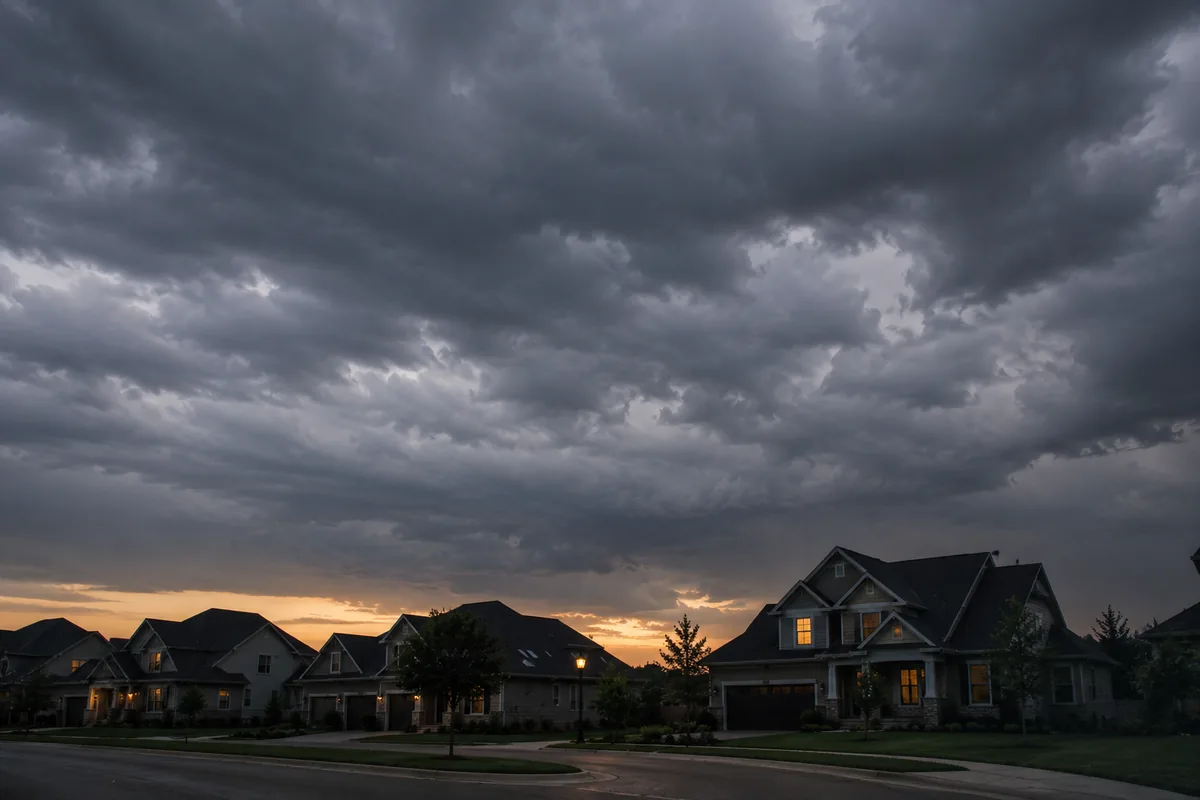
The outage you buy this for is the one you are not home for
Most standby generators are bought after a specific bad night - a storm that took the power out for three days, a basement that flooded because the sump had no power, a freezer emptied into a bin. The machine is insurance against the version of that night where nobody is there to start anything.
- It starts without you The transfer happens whether you are home, asleep, or three states away.
- It runs on piped fuel No cans to refill in the dark, in the weather, at 2am.
- It protects the things that fail quietly Sump pumps, well pumps and freezers do their damage while nobody is watching.
What would this cost at your house?
Two questions. No email, no phone, no ZIP - the estimate is right there when you answer them.
See every band in a table
| Coverage | Fuel at the pad | Typical installed |
|---|---|---|
| Essential circuits | Already there | $6,000-$9,000 |
| Essential circuits | Needs running | $6,500-$10,500 |
| Most of the house | Already there | $8,500-$13,000 |
| Most of the house | Needs running | $9,000-$14,500 |
| Everything, including A/C | Already there | $12,000-$18,000 |
| Everything, including A/C | Needs running | $12,500-$20,000 |
HomeMatchup does not perform standby generators. We match you with licensed local backup generators pros for a standby generator. Free for homeowners — Get matched free · how we verify pros.
When a standby generator is the wrong call
When saying yes is the wrong move:
- Your outages are rare and short, and someone is always home. A quality portable with a properly installed inlet and interlock covers this for a fraction of the money. Standby buys automation you would not use.
- You will not maintain it. An unexercised standby unit fails silently, and you find out on the one night it mattered. The battery is what usually dies first, and it dies quietly.
- There is no gas service and nowhere for propane tanks. Standby assumes piped fuel. Without it you are pricing a fuel infrastructure project that happens to include a generator.
- Setbacks, HOA rules or a local noise ordinance forbid a permanent outdoor unit. Confirm this before you fall for a kW chart - it is a hard stop, not a negotiation.
- You only need to keep a freezer cold for a few hours. Right-size the actual problem. A battery unit or a portable solves that without a gas permit.
- You want silent, maintenance-free backup with nothing outside. That product exists and it is battery storage. An engine will not become it, however the brochure reads.
Types of standby generators
| Option | What it means for you |
|---|---|
| Whole home generator installation | The full project: siting, pad, permits, lead time and the largest machine class. |
| Natural gas or propane | What the machine burns, and the gas work each fuel implies on your site. |
| Transfer switch | The switching equipment on its own - the component that makes any of this automatic. |
| Portable generator | Manual backup, for when automatic coverage is not justified by your outage history. |
What to check when hiring for a standby generator
- Does this start and transfer with nobody home, and which transfer switch is included? This is the definition of standby, and it belongs in the quote body rather than in a conversation you cannot reference later.
- What load list is this kW sized to? Ask for the circuits by name. Two quotes at the same kW can cover very different houses.
- Have you checked whether my gas meter supports this unit? If the answer is no, the price is provisional. Meter upsizing runs on the utility's schedule, not the installer's.
- Who pulls the electrical and gas permits, and is that in this price? Standby is a multi-trade job, and split responsibility is how one trade's step gets orphaned between two companies.
- Will you demonstrate a full simulated outage at handover, with me there? Starting the engine in the driveway is not the same as carrying house loads through the transfer switch.
- How does this compare to a portable plus an inlet, for my actual outage history? An installer who answers this honestly is one who is not simply closing you. It is the fastest read you get on whether to trust the rest of the quote.
How long a standby generator actually takes
| Phase | Typical duration | What happens |
|---|---|---|
| Load calculation & quote | Site visit | The installer walks your panel, the gas meter and the proposed pad location, and builds the load list the sizing is derived from. |
| Permits | Jurisdiction-dependent | Electrical and gas permits are pulled, normally by the contractor in their own name. This step, not the install, is usually what sets your start date. |
| Gas meter upsize (if needed) | Utility-dependent | If the generator outruns your meter, the utility has to upsize it. This sits outside the contractor's control and is the most common source of delay. |
| Pad & rough-in | Typically one visit | Pad poured or set, conduit and gas line run, transfer switch mounted beside the panel. |
| Set, connect & commission | Typically one visit | Unit set, connections made, gas pressure-tested, then a simulated outage to prove transfer under load. |
| Inspection sign-off | Jurisdiction-dependent | Electrical and gas inspections. Do not release final payment before both have passed. |
Permits & inspection
Permits usually required
- Electrical permit - covers the transfer switch, the feed to your panel, and any panel work
- Plumbing / gas permit - covers the natural gas or propane line to the unit
- Zoning or HOA approval where setbacks, screening or noise limits apply
What gets inspected
- Gas piping is pressure-tested before sign-off
- Transfer switch and bonding inspected by the electrical inspector
- Clearances from windows, doors and vents verified against the manufacturer's spec
What a complete quote should contain
-
The load list the kW rating was calculated from
Not "whole home" as a phrase - the actual circuits, named. This is the line you compare between quotes.
-
The transfer switch make, model and amperage, as its own line
Bundled invisibly into one number, you cannot tell whether you are getting a service-entrance-rated switch or the cheapest one that fits.
-
Both permits, priced, and assigned to the contractor by name
Explicit, so there is no argument later about who was supposed to pull them.
-
Gas line scope, stating whether meter upsizing is included or excluded
Exclusions are where a fixed price quietly becomes a variable one.
-
Pad type and site prep
Poured, pre-cast or composite - and who clears and levels the ground it sits on.
-
Commissioning: a simulated outage test with you present
Written into the scope rather than assumed. This is your proof the system works before the balance is paid.
-
Warranty terms split between unit and labour
These are almost always different lengths, and the labour one is the one that matters in year three.
Red flags when hiring for a standby generator
- The quote is one number with no line items. You cannot compare it to anything and cannot see what was excluded. Ask for it itemised, or move on.
- The transfer switch is missing, vague, or "your electrician can add it later". Then it is not a standby system. It is a generator on a pad beside a house it cannot safely power.
- Nobody has looked at your gas meter. Sizing a unit before checking fuel supply is guessing, and the correction arrives after your deposit has been paid.
- You are asked to pull the permits. Licensed contractors pull permits in their own name. Moving that to you moves the liability to you.
- A discount that expires today. A permitted, multi-trade install with a utility dependency is not a same-day decision. Anyone framing it as one is optimising for your signature, not your house.
- Whole-home is the only option offered. Ask for an essentials quote alongside it, in writing, with covered circuits listed. A refusal tells you what the pitch is optimised for.
Keeping it working - and keeping the warranty
| Task | When | Why it matters |
|---|---|---|
| Confirm the weekly exercise ran | Weekly | Most units self-test on a schedule. Know the day and time - it is also what your neighbours will hear. |
| Check the battery | Per manufacturer schedule | The battery is the most common cause of a no-start on the night it matters, and it fails silently between outages. |
| Oil, filters and plugs | Per the manufacturer's stated interval | Intervals vary by machine and by fuel. Use the manual's figure rather than a generic one, and keep the records for the warranty. |
| Keep clearances clear | Seasonally | Landscaping and snow drift into the clearances the manufacturer requires. A screen that hides the unit also blocks the access a technician needs. |
| Run a load test | Annually | Exercise runs the engine. A load test proves the transfer switch still carries the house - which is the part that actually strands you. |
Standby Generator near you
Local pro matching for a standby generator is rolling out by metro. Enter your ZIP and we'll match you with local pros in your area today.
Sources
Sources last checked
- How Much Does a Whole House Generator CostHomeGuideRetrieved 2026-07-27Installed cost range for residential whole-house systems.
- Whole House Generator Cost [2026 Data]AngiRetrieved 2026-07-27Installed cost range and component-level breakdown.
- Whole House Generator Cost: Complete Price BreakdownPower Up Generator SolutionsRetrieved 2026-07-27Cost banding by generator capacity (10-14kW, 18-24kW, 26kW+).
Sources for figures and claims on this page.
Get a standby generator quotes
Matched backup generators pros. Free for homeowners.
Free · No obligation